The recent coverage of Tesla’s Cybercab plans got me thinking about whether I really need to own a car. If getting a ride becomes cheap and convenient enough, at what point does buying one stop making financial sense?
I’m especially interested in the calculation when you don’t commute to work. Take out that daily round trip and what’s left is errands, dinner with friends, social gatherings, the occasional airport run. Depending on where you live, that might be surprisingly little driving to spread the cost of a car across.
An Uber receipt makes the price of each trip obvious. Car ownership distributes it across insurance, maintenance, taxes, parking, financing and depreciation. Some of those costs arrive once a year; others only become clear when you sell. A $25 ride is easy to notice. The cost of a week when your car sits unused is less visible.
Driving less saves fuel and some wear, but many ownership costs continue regardless. That’s what makes removing the commute interesting: a large part of the use disappears without a corresponding drop in the cost.
While looking into this, I found Sam Altman’s 2014 post comparing Uber with car ownership. Uber came out cheaper for him. He owned a Tesla Roadster, lived in San Francisco and also took Caltrain, which puts a fairly large asterisk on the result. Still, he was asking the same question twelve years ago, with a human behind the wheel.
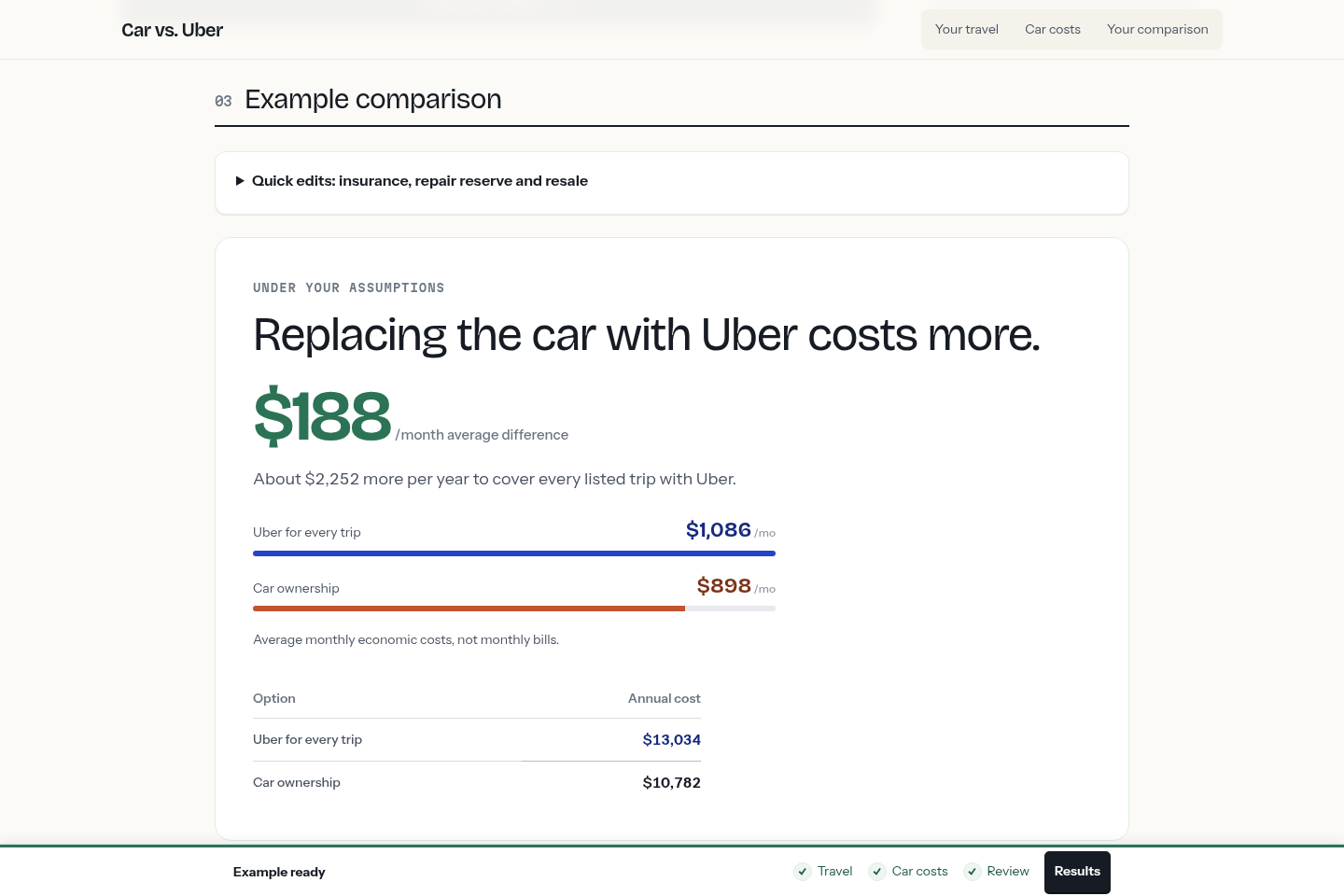
I wanted a quick way to run that comparison using the trips someone actually takes, so I made Car vs. Uber.
You enter your usual travel, what those rides would cost locally, and the costs of a car you’re considering buying. It compares the same trips in both cases and estimates how much you could spend on Uber before the car becomes cheaper. You can change the fares to see how sensitive the answer is.
The scope is deliberately narrow. It compares buying a car with taking Uber for those trips. Keeping a car you already own is a different calculation, as is combining rides with transit and occasional rentals. You supply the local fares; it doesn’t fetch live prices or predict what Cybercab rides will cost.
That leaves a useful question you can answer today. Start with current prices and your actual travel. If owning wins, how much would rides need to fall in price to change the result?
A car can still be worth owning even when it costs more. Leaving whenever you want, heading somewhere remote, or throwing a bunch of things in the trunk has value. I’d just like to know how much I’m paying for that flexibility.
If you don’t have a daily commute, I’m particularly curious where your numbers land.